
Closing the Insulin Gap: Why Insulin Resistance Can Block Weight Loss
Most people think they have a weight-loss problem.
In many cases, they have an insulin problem first.
At our clinic, one of the most common patterns we see is this: someone tells us they are eating less, trying to make better choices, walking more, even training harder, and yet they are still gaining around the middle, crashing in the afternoon, and fighting cravings at night.
That is often not a discipline problem.
That is often a signal problem.
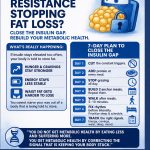
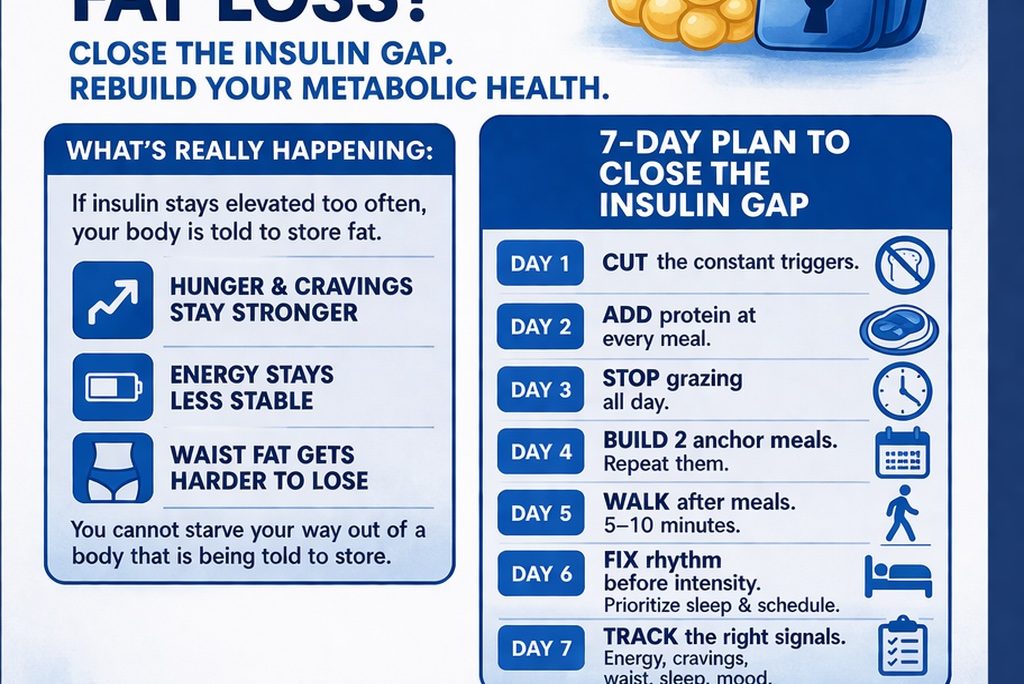
When insulin stays elevated too often and for too long, the body has a harder time accessing stored fuel. Hunger gets louder. Cravings get stronger. Energy becomes less stable. Waist fat becomes harder to lose.
That is why some people feel like they are doing everything “right” and still not getting traction.
Key Takeaways
- Insulin resistance can make fat loss harder even when someone is trying to eat better and exercise more.
- The “insulin gap” is our practical teaching term for a body that is spending too much of the day under storage signaling and not enough time returning toward metabolic baseline.
- The first week should focus on removing common triggers, increasing protein, stopping grazing, building anchor meals, walking after meals, improving sleep rhythm, and tracking the right signals.
- Long-term progress depends on keeping protein intake, muscle-building, sleep, rhythm, and stress regulation in the plan.
What Is the Insulin Gap?
The “insulin gap” is our practical teaching term for a body that is spending too much of the day under storage signaling and not enough time returning toward metabolic baseline between meals.
It is not a formal medical diagnosis. It is a simple way to explain why some people stay metabolically stuck.
Insulin’s job is to help move glucose from the bloodstream into cells. In insulin resistance, the body does not respond to insulin the way it should. Over time, that can contribute to rising blood sugar, greater metabolic strain, and more difficulty losing fat.
You cannot starve your way out of a body that is still being told to store.
Why This Matters
Insulin resistance is not just about weight.
It is associated with:
- prediabetes
- type 2 diabetes
- metabolic syndrome
- fatty liver
- abnormal cholesterol and triglycerides
- higher cardiometabolic risk
It also affects how people feel day to day.
Many patients notice:
- stronger cravings
- more afternoon crashes
- increasing waist size
- more difficulty losing body fat
- less stable energy
Why “Eat Less and Exercise More” Often Fails
If someone is snacking all day, sleeping poorly, under-eating protein, losing muscle, eating highly processed carbohydrates, and living in a constant stress cycle, the issue is not just calories.
The issue is physiology.
That is why generic advice often falls short.
The better question is not, “How much can I restrict?”
The better question is, “What is keeping this body metabolically stuck?”
A 7-Day Plan to Start Closing the Insulin Gap
This is not a forever prescription for every person. It is a short reset designed to reduce metabolic noise and improve signaling.
Day 1: Remove the Constant Triggers
For seven days, remove the foods most likely to keep cravings and blood sugar cycling all day:
- no bread
- no crackers
- no cereal
- no pasta
- no sugary drinks
- no desserts
If fruit is included, keep it to berries only.
Day 2: Put Protein at Every Meal
If the meal is not anchored in protein, appetite control often gets worse, not better.
Protein helps with satiety, lean mass retention, and blood sugar stability.
Day 3: Stop Grazing
If you keep reopening the insulin gap every two to three hours, it becomes much harder for the system to settle down.
For many people, three deliberate meals work better than a full day of random intake.
Day 4: Build Two Anchor Meals
Pick one breakfast and one lunch you can repeat consistently.
Anchor meals reduce decision fatigue, improve compliance, and make blood sugar support more realistic in everyday life.
Day 5: Walk After Meals
A five- to ten-minute walk after meals is one of the simplest interventions in metabolic care.
Post-meal walking can help improve glucose handling and reduce post-meal spikes.
Day 6: Fix Rhythm Before Intensity
A chaotic body usually does not need more punishment. It needs better timing.
That means:
- consistent wake time
- early outdoor light
- hydration early in the day
- a protein-anchored morning
- less late-night eating
- a real evening wind-down
If sleep and rhythm stay broken, cravings and metabolic dysfunction are much harder to improve.
Day 7: Track the Right Signals
Do not just watch the scale.
Track:
- cravings
- energy
- waistline
- sleep
- digestion
- mood
The body often shows improvement in signal quality before it shows dramatic weight change.
What to Do After Day 7
Do not go right back to the same habits that created the problem.
After the first week, the goal is to keep the signal improving.
That usually means:
- keep protein high
- keep processed carbohydrates low
- keep fruit strategic, with berries as the default
- keep walking after meals
- keep strength training in the plan
- keep sleep and rhythm protected
- keep stress from running the whole system
Why Muscle Matters
If insulin resistance is part of the problem, muscle needs to be part of the solution.
Muscle is one of the body’s major glucose sinks. Preserving and building lean mass helps support better insulin sensitivity, better metabolic resilience, and better long-term body composition outcomes.
That is why strength training is not just an aesthetic tool.
It is a metabolic tool.
A Functional Medicine Perspective: Why This Has to Be Individualized
Not every person with insulin resistance has the same driver.
For one patient, the major issue may be poor sleep, low muscle mass, and late-night eating.
For another, it may be chronic stress, a highly processed diet, appetite dysregulation, and sedentary days.
For another, it may be visceral fat gain in midlife, poor recovery, hormone disruption, and a collapsing daily rhythm.
That is why a functional medicine approach asks better questions:
- What are the blood sugar patterns?
- What does sleep look like?
- What do cravings look like?
- What is happening with waist circumference?
- How much protein is actually being eaten?
- How much muscle is being maintained?
- What are stress and cortisol patterns doing?
- Are hormones, thyroid function, medications, or sleep apnea part of the picture?
The point is not to chase one symptom.
The point is to understand the system.
The Bottom Line
The first goal is not simply to eat less.
The first goal is to correct the signal.
When the insulin gap starts closing, the body often becomes far more willing to respond. Hunger gets quieter. Cravings become more manageable. Energy gets steadier. Waistline change starts to make more sense. And sustainable fat loss becomes much more realistic.
That is when metabolic health stops feeling like punishment and starts feeling like physiology finally working with you again.
FAQ
What is the insulin gap?
The insulin gap is our clinic’s teaching term for a body that is spending too much of the day under repeated storage signaling and not enough time returning toward metabolic baseline between meals.
Can insulin resistance keep you from losing weight?
Yes. It can make fat loss significantly harder by affecting appetite, waist circumference, blood sugar control, and metabolic flexibility.
What foods should I avoid during a 7-day insulin reset?
For a short reset, we typically remove bread, crackers, cereal, pasta, sugary drinks, desserts, and other highly processed carbohydrate-heavy foods, while keeping fruit to berries only.
Why is protein important for metabolic health?
Protein helps with satiety, lean mass retention, and blood sugar stability, which makes it a key part of any metabolic reset.
Does walking after meals really help?
Yes. Post-meal walking is one of the simplest and most effective ways to support better glucose handling.
Call to Action
If you are dealing with stubborn weight, cravings, poor energy, sleep disruption, or a waistline that keeps moving in the wrong direction despite “doing everything right,” the next step is not more random restriction.
It is a more structured metabolic strategy.
Explore the Rebuild Metabolic Health Institute, review the 12-week curriculum, and join the waitlist if the next cohort is full.
You are not broken.
You are unbalanced.
And balance can be rebuilt.